Adjectives comprise one of the eight French parts of speech, but certain members of other grammatical categories can sometimes be used as adjectives. These "non-adjectives" are invariable: there's no gender/number agreement with the nouns they modify.
Most French nouns and adjectives become feminine with the addition of -e, but there are some exceptions. Some nouns require an additional spelling change, depending on the final letter(s) of the word.
The French numbering system is infamous for the compound expressions found between 70 and 99. But that's not all: there are also a number (ha ha) of tricky expressions with some of the single digits, both ordinal and cardinal.
Direct and indirect objects can be hard to understand even in your native language, and replacing them with object pronouns adds an extra layer of difficulty, particularly in French.
Love it or hate it, grammar is an essential part of language, and using object pronouns correctly is key to making your sentences sound more natural. This issue of Lawless French à fond takes an in-depth look at direct and indirect object pronouns, where they go, and when and why it's important to use them.
By definition, compound tenses and moods require an auxiliary verb plus past participle. However, when using two or more compound conjugations with the same subject, you don't always need to include the auxiliary verb for each one.
The indefinite French subject pronoun on literally means "one," but is usually translated by an indefinite subject. Agreement with the subject implied by on is optional - at least in theory.
There isn't only one way to say "only" in French. (See what I did there?) The English adverb "only" is used to restrict the verb, clause, or noun it modifies, and the most common ways to translate this into French are with seulement and ne ... que. While they both mean "only," they have different grammar rules.
In English, we say that the vowels are "a, e, i, o, u, and sometimes y." The last couple of words hint at one of the keys to understanding pronunciation: a vowel is not so much a letter as the sound represented by a letter or combination of letters.
Practice is the key to improving your French, and just 15 minutes a day on some kind of French activity can make a huge difference. Check out these ideas and draw up your own schedule.

 Grammaire
 Adjectives comprise one of the eight French parts of speech, but certain members of other grammatical categories can sometimes be used as adjectives. These "non-adjectives" are invariable: there's no gender/number agreement with the nouns they modify.
  One of the eight parts of speech, a noun is commonly defined as "a person, place, or thing." If that seems vague, that's because it is.
  Most French nouns and adjectives become feminine with the addition of -e, but there are some exceptions. Some nouns require an additional spelling change, depending on the final letter(s) of the word.
  The French pronouns nous and vous are both five different types of pronouns.
  The French numbering system is infamous for the compound expressions found between 70 and 99. But that's not all: there are also a number (ha ha) of tricky expressions with some of the single digits, both ordinal and cardinal.
 The placement of object, reflexive, and adverbial pronouns depends on which of the four main verb constructions they're used with.
 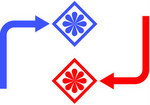 Love it or hate it, grammar is an essential part of language, and using object pronouns correctly is key to making your sentences sound more natural. This issue of Lawless French à fond takes an in-depth look at
  By definition, compound tenses and moods require an auxiliary verb plus past participle. However, when using two or more compound conjugations with the same subject, you don't always need to include the auxiliary verb for each one.
  The indefinite French subject pronoun on literally means "one," but is usually translated by an indefinite subject. Agreement with the subject implied by on is optional - at least in theory.
  What's the difference between on and l'on? In a nutshell, on is sometimes preceded by l' for reasons of euphony.
  There isn't only one way to say "only" in French. (See what I did there?) The English adverb "only" is used to restrict the verb, clause, or noun it modifies, and the most common ways to translate this into French are with seulement and ne ... que. While they both mean "only," they have different grammar rules.
  Learn pairs of antonyms with this selection of opposing adjectives, adverbs, and pronouns.
  Verb conjugation tables for more than 1,600 French verbs in all the simple and compound tenses and moods.
 In English, we say that the vowels are "a, e, i, o, u, and sometimes y." The last couple of words hint at one of the keys to understanding pronunciation: a vowel is not so much a letter as the sound represented by a letter or combination of letters.


 Practice is the key to improving your French, and just 15 minutes a day on some kind of French activity can make a huge difference. Check out these ideas and draw up your own schedule.