United States (of America)


 Superlative adverbs are used to profess absolute superiority or inferiority among two or more things. This superlative lesson will help you be the best at using them.
 adverbs • B1 - Intermediate French

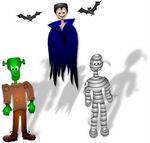
 Test yourself on French vocabulary for Halloween with this fill-in-the-blanks test:
 When talking about something that happened in the past, the correct verb tense isn't always enough - sometimes you need a temporal expression to state just when it happened. The most common French temporal expressions are depuis and il y a, and they are not interchangeable.
 A2 - Low-Intermediate French • prepositions


 Many French conjunctions and conjunctive phrases require the subjunctive, notably those which link cause and effect.

 In both French and English, the letter combination PH is just another way to spell the sound of the letter F.
 The third conditional is an if-then proposition that expresses an impossible situation: if something had happened (the condition), then something else would have happened (the result). The condition is expressed with the past perfect, and the impossible result is indicated with the conditional perfect.
 B2 - Upper-Intermediate French • verbs

Bonjour !
Lawless French is a free website.
Please disable your ad-blocker
or
donate to support my work.
BONUS
Donate US$5 / month to unlock
le Mot du jour.