 Prononciation
Elision
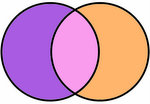 An elision is a type of contraction that occurs when two words are combined: one or more letters are dropped and replaced with an apostrophe. In French, written elisions are required, regardless of the register you're speaking or writing in.
  An elision is a type of contraction that occurs when two words are combined: one or more letters are dropped and replaced with an apostrophe. In French, written elisions are required, regardless of the register you're speaking or writing in.
 A1 - Beginning French • spelling
 The letter combination en has four possible pronunciations, depending on the letters that precede or follow it.
  Whenever a word ending in a consonant sound is followed by a vowel or h muet, that consonant sound is transferred onto the next word. This is called enchaînement and it's one of the aspects of French pronunciation that sometimes makes it difficult to determine where one word ends and the next begins.
  The third person plural verb ending -ent is often not pronounced. The rules for when and how to pronounce it are fairly straightforward: it has to do with two completely different issues.
  The letter combination eu has three possible pronunciations, two of which are very similar.
  The letter combinations euil and euill are pronounced like the oo in "foot" plus a "y" sound.
  French grammar is sometimes trumped by pronunciation, as in the case of euphonic adjectives. Because French does not like the hiatus created when a word ending with a vowel precedes a word that begins with a vowel or mute h, a few adjectives change their spelling—and thus their pronunciation—for purely euphonic reasons.
 A2 - Low-Intermediate French • adjectives • spelling
 When inversion results in a hiatus (two vowel sounds together), the letter -t must be added for euphony, but only under two conditions.
  It's no accident that spoken French is beautiful - there are actually grammatical changes required to avoid hiatus in order to maintain euphony, so that words flow together like music.
  The letter F is pronounced similarly in French and English.
  Some liaisons are forbidden: they aren't—can't be—pronounced even in the most formal French. Sometimes this is to avoid confusion with similar expressions, sometimes it has to do with a sort of respect for names and foreign words, and other times there's no apparent logic to it.
  The letter G has two pronunciations: hard and soft.
  The letter combination gn is usually pronounced like the "ni" in "onion."
  Only three French vowels can take the grave accent: à, è, and ù, and the purpose of the accent depends on the letter in question.
  The letter H is always silent in French, yet there are two different types of H. Inverting subjects and verbs is easy enough - vous voyez => voyez-vous, but where do object, adverbial, and reflexive pronouns go? And what about negation? Take a look at this lesson to learn about all the possibilities.
 Magnetic poetry is a fun little tool you can use to learn and practice French. 500 magnets with words and parts of words help you to express yourself in a unique and creative way.
 Getting friendly with the French (and many other Europeans) means getting comfortable with les bises. 💋 These not-quite-cheek-not-quite-air kisses are an essential part of French culture, so being prepared to give and receive them is vital. Today's issue of Lawless French à fond takes an in-depth look at les bises: what they are, when and how to do them, and more.


 There’s no secret recipe for fluency; indeed, it’s difficult to even find consensus on what "fluency" actually means. Is it the ability to have a conversation, or language proficiency equivalent to that of a native speaker?
Bonjour !
Lawless French is a free website.
Please disable your ad-blocker
or
donate to support my work.
BONUS
Donate US$5 / month to unlock
le Mot du jour.